Cruises depart hourly from Pier Head, Liverpool, starting at 10am daily. Round-trip sailings take approximately 50 minutes. Services operate year-round, with reduced winter timetables on weekdays. Sailings are subject to tidal conditions and severe maritime weather, with cancellations communicated on the morning of travel.
Explore River Mersey cruises in Liverpool | Highlights, visitor's guide, and more
Crafted by Headout, a global experiences brand offering curated tours, tickets & experiences. Discover with ease, book with peace.Loved by over 56 million guests worldwide
What is a River Mersey cruise in Liverpool?
A River Mersey Cruise is a 50-minute sightseeing river journey departing from Liverpool's waterfront and Woodside in Birkenhead. Ships run hourly, providing continuous views of the city skyline, active docks, and coastal landmarks. The River Mersey has served as North West England's main maritime corridor since medieval times, carrying passenger traffic across a 10-metre tidal range. The experience offers open-deck and enclosed seating alongside commentary covering the region's naval history, trade routes, and musical heritage.
Why take a River Mersey cruise?

1/4
A 50-minute circular sailing with constant skyline views
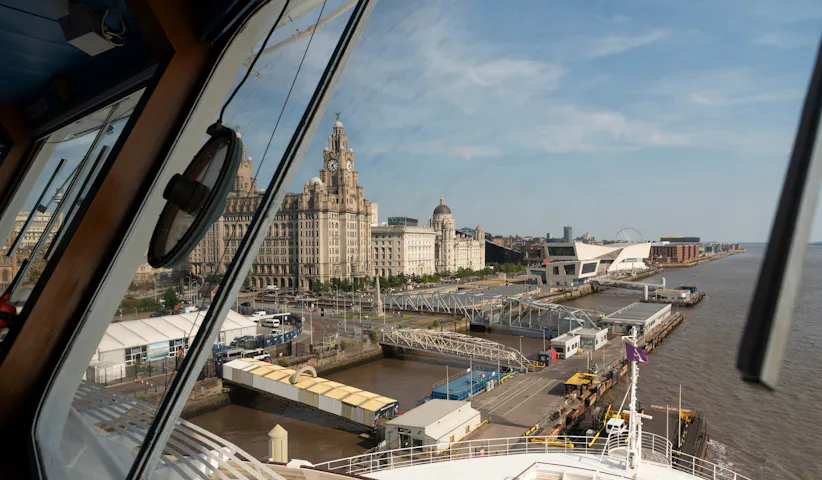
The route stays within the estuary, providing continuous sightlines of Liverpool’s waterfront architecture, including the Royal Liver Building, without long stretches of open water.
Sailings operate hourly with flexible hop-on hop-off options
Ferries depart regularly throughout the day from Pier Head and Woodside. Passengers can disembark at intermediate stops to visit nearby waterfront museums before boarding a later departure.
Recorded commentary provides historical context throughout the route
Audio commentary details the river’s role as an Anglo-Saxon border, its 19th-century trade dominance, and its connections to transatlantic trade and popular culture.
Estuary wind and weather can affect deck comfort significantly
The open top deck experiences strong coastal winds year-round. Enclosed lower decks offer full shelter, but window seating fills quickly during busier afternoon sailings.
Plan your visit for a River Mersey cruise
Departure times
Best time to visit
Morning sailings between 10am and 11:30am offer lower passenger numbers and shorter boarding queues. Spring and summer months (May to September) bring clear visibility across Liverpool Bay. Weekend departures during mid-afternoon represent peak volume; advance booking secures your preferred departure slot during the summer months.
Where to board
Main departures leave from the Pier Head Ferry Terminal (L3 1BY), located directly in front of the Royal Liver Building. The terminal sits a 10-minute walk from James Street station on the Merseyrail network. Additional boarding is available across the river at Woodside Ferry Terminal in Birkenhead.
What happens on the day
Boarding at Pier Head Terminal
Passengers line up at the main Pier Head terminal 15 minutes before departure. Tickets are scanned at the gangway before boarding the vessel. Lower decks feature enclosed heated seating with panoramic windows, while the upper deck offers unobstructed exterior views. Early arrival secures upper deck perimeter seating.
Sailing past the Three Graces
As the vessel moves out into the main channel, the route tracks parallel to Liverpool's UNESCO-recognized waterfront. The commentary introduces the Royal Liver, Cunard, and Port of Liverpool buildings. Ships maintain a steady cruising speed, keeping motion smooth throughout this section.
Crossing the estuary to Woodside
The ferry cuts across the 1-kilometre-wide river channel towards the Wirral peninsula. This crossing point highlights the estuary's strong currents and tidal range. Passengers on the top deck get clear views back toward the city skyline, the Royal Albert Dock, and the Cathedral towers beyond.
Return leg along the docklands
The final 15 minutes track north past active shipping berths, shipyards, and modern residential developments before returning to Pier Head. Book tickets online in advance to skip ticket office lines at the terminal, particularly during bank holiday weekends.
More about the River Mersey
The River Mersey takes its name from Old English for "boundary river," having historically formed the border between the Anglo-Saxon kingdoms of Mercia and Northumbria, and later Lancashire and Cheshire. From the 18th century onward, the river developed into one of the world's most critical trading arteries, handling a vast proportion of global merchant traffic through its expanding dock system. Transatlantic passenger liners, trade ships, and naval vessels relied on its deep-water channel. Understanding that the river's 10-metre tidal flux forced the development of pioneering wet docks reframes how you view the granite sea walls and lock gates visible along the shore today.
Before you go
Need to know
- Accessibility: Pier Head terminal and the lower decks of the vessels feature full step-free ramp access; upper decks are accessible via stairs only.
- Weather preparation: Coastal winds mean the temperature on the top deck feels considerably cooler than on land; bring a windproof layer regardless of season.
- Pet policy: Permitted service animals are allowed on all areas of the ferry; standard domestic pets must remain on the outer deck areas.
Worth knowing
- Seat selection: Sit on the right-hand side (starboard) when departing Pier Head for the best immediate views of the city docks as the boat turns into the channel.
- Combined tickets: Bundled passes combining the river cruise with the U-boat Story or hop-on bus tours offer better value than individual walk-up tickets.
- Timing: Arrive 20 minutes prior to scheduled departure times during peak summer months to ensure group seating together on the top deck.
Frequently asked questions about River Mersey cruises
The River Mersey is famous for its maritime trading history, musical heritage celebrated in "Ferry Cross the Mersey," and its prominent role defining Liverpool's iconic waterfront skyline.
Standard sightseeing cruises last approximately 50 minutes round-trip if you stay on board continuously between Pier Head and Woodside terminals.
Advance booking is recommended during summer months and weekends to secure specific departure slots, though walk-up tickets are available at the terminal box office.
Yes, main boarding terminals and the lower enclosed decks of the vessels feature ramped step-free access, though top decks require navigating stairs.
Yes, tickets allow hop-on hop-off flexibility at Woodside Ferry Terminal in Birkenhead. You can explore local attractions on the Wirral waterfront before reboarding a later scheduled ferry back to Pier Head.
Enclosed passenger decks feature a licensed café counter selling hot coffee, tea, soft drinks, and light snacks. You can consume refreshments while enjoying views from indoor seating or open-air observation decks throughout the journey.
If severe maritime conditions or high winds prevent safe river navigation, sailings are paused. Ticket holders are offered full refunds or hassle-free rebooking options for alternative time slots.
The main vessel speakers broadcast live or recorded English commentary throughout the route. Digital commentary apps and printed translation guides in multiple languages can be requested at the terminal box office before boarding.


